
Built for Teaching, Not Diagnosis
Why clinicians choose it
Feedback in minutes instead of waiting days for a supervisor
Grounded in the standards your society already uses — not a generic model
Built to teach, not to diagnose
Works alongside the ultrasound devices you already have
Versus waiting for a supervisor
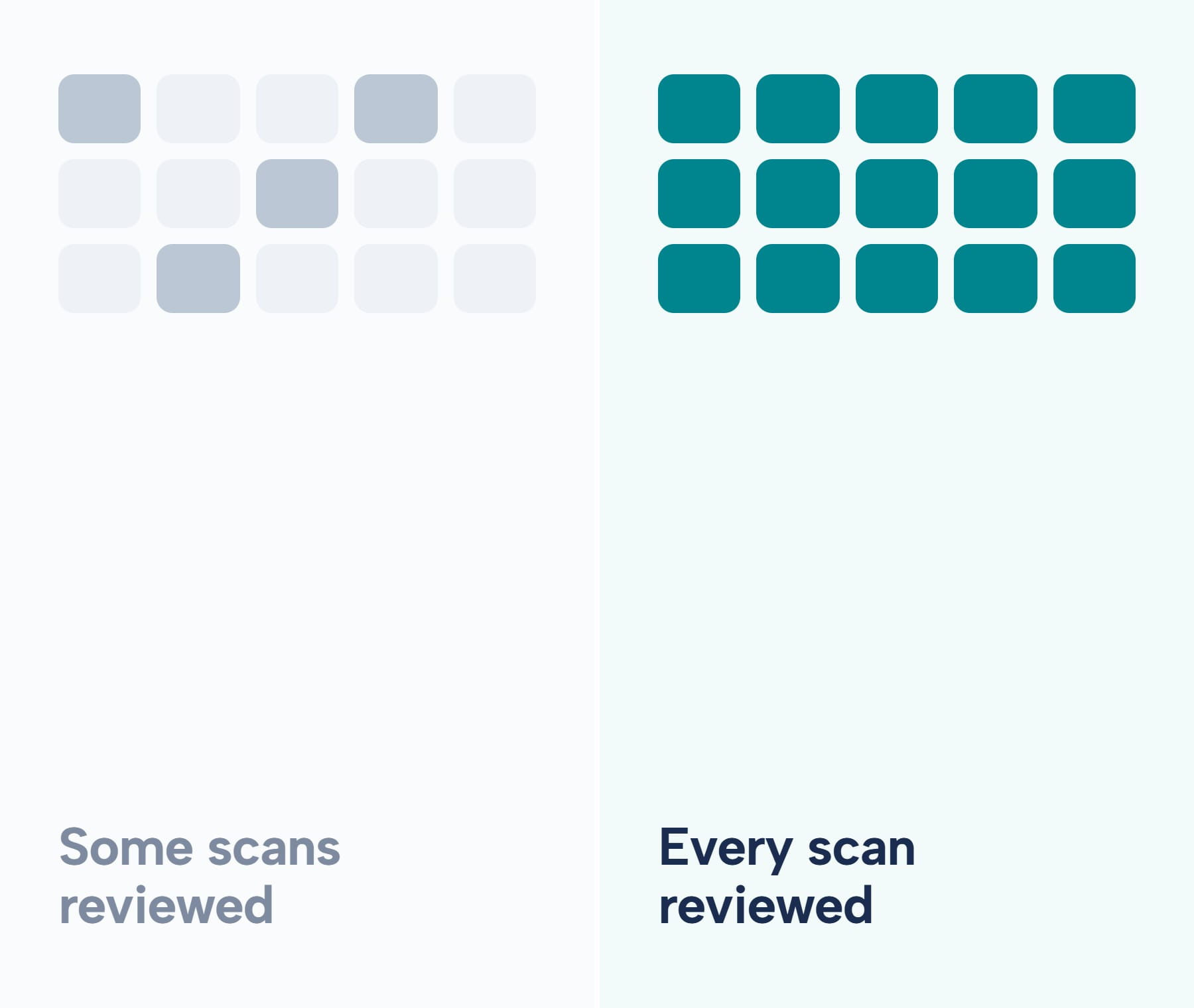
The default alternative to Instant Review is not a competitor product — it is the status quo of manual review. In that world, a learner finishes a scan and joins a queue. Feedback depends on a faculty member who is stretched thin, works asynchronously, and can only review a finite number of studies. Comments arrive days later, detached from the moment of acquisition, and often reduced to a rubber-stamp sign-off because there simply is not time for more.
Instant Review removes the wait and the ceiling at once. Feedback returns in minutes, every scan gets reviewed rather than a sampled few, and faculty are freed to spend their limited time on the judgment calls that genuinely require a human. The comparison is not “AI versus expert” — it is “timely, consistent feedback on everything” versus “delayed, uneven feedback on some.”
Versus a generic large language model
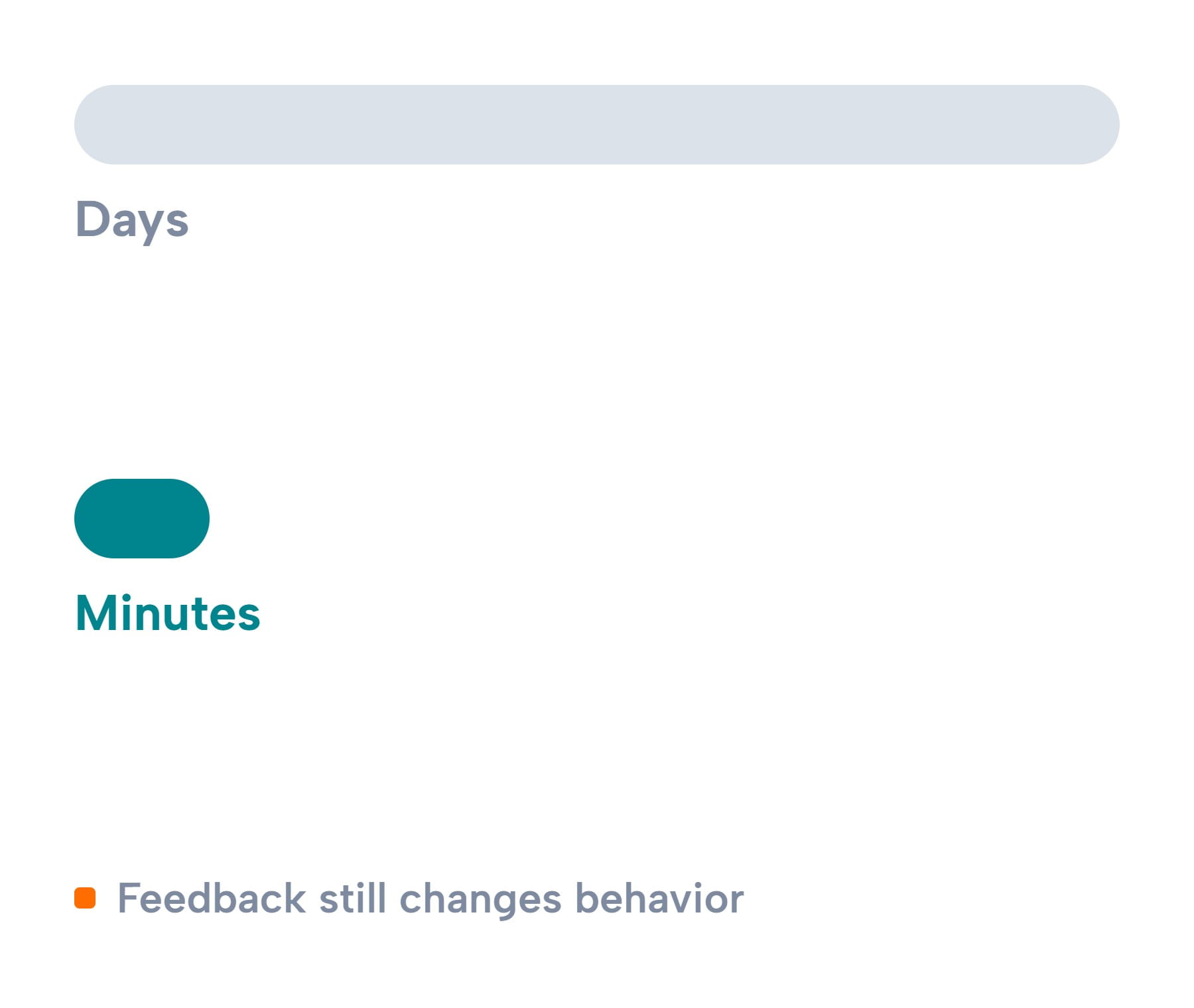
The default alternative to Instant Review is not a competitor product — it is the status quo of manual review. In that world, a learner finishes a scan and joins a queue. Feedback depends on a faculty member who is stretched thin, works asynchronously, and can only review a finite number of studies. Comments arrive days later, detached from the moment of acquisition, and often reduced to a rubber-stamp sign-off because there simply is not time for more.
Instant Review removes the wait and the ceiling at once. Feedback returns in minutes, every scan gets reviewed rather than a sampled few, and faculty are freed to spend their limited time on the judgment calls that genuinely require a human. The comparison is not “AI versus expert” — it is “timely, consistent feedback on everything” versus “delayed, uneven feedback on some.”
The society-guideline layer: ACEP and SHM
Versus clinical-diagnostic AI
Most AI ultrasound tools optimize for a narrow clinical, diagnostic task — a single scan type, a single measurement — and position themselves as decision support. Instant Review takes the opposite stance on purpose. It is education and quality-assurance first, it spans the breadth of primary-care use cases rather than one organ, and it is transparent about being a learning tool that never makes clinical calls. That posture is not a limitation; it is what makes it safe to deploy broadly across a program and defensible to compliance and legal reviewers.
Works with your devices
As ultrasound hardware companies become a distribution and go-to-market channel for POCUS, an education layer that works across devices is an asset, not an afterthought. Instant Review is designed to sit alongside the equipment programs already use — including GE and Butterfly — so the value compounds with the hardware clinicians are adopting rather than competing with it.
Ipsa quae ab illo inventore veritatis et quasi architecto
When Instant Review is the right fit
The real cost of the status quo
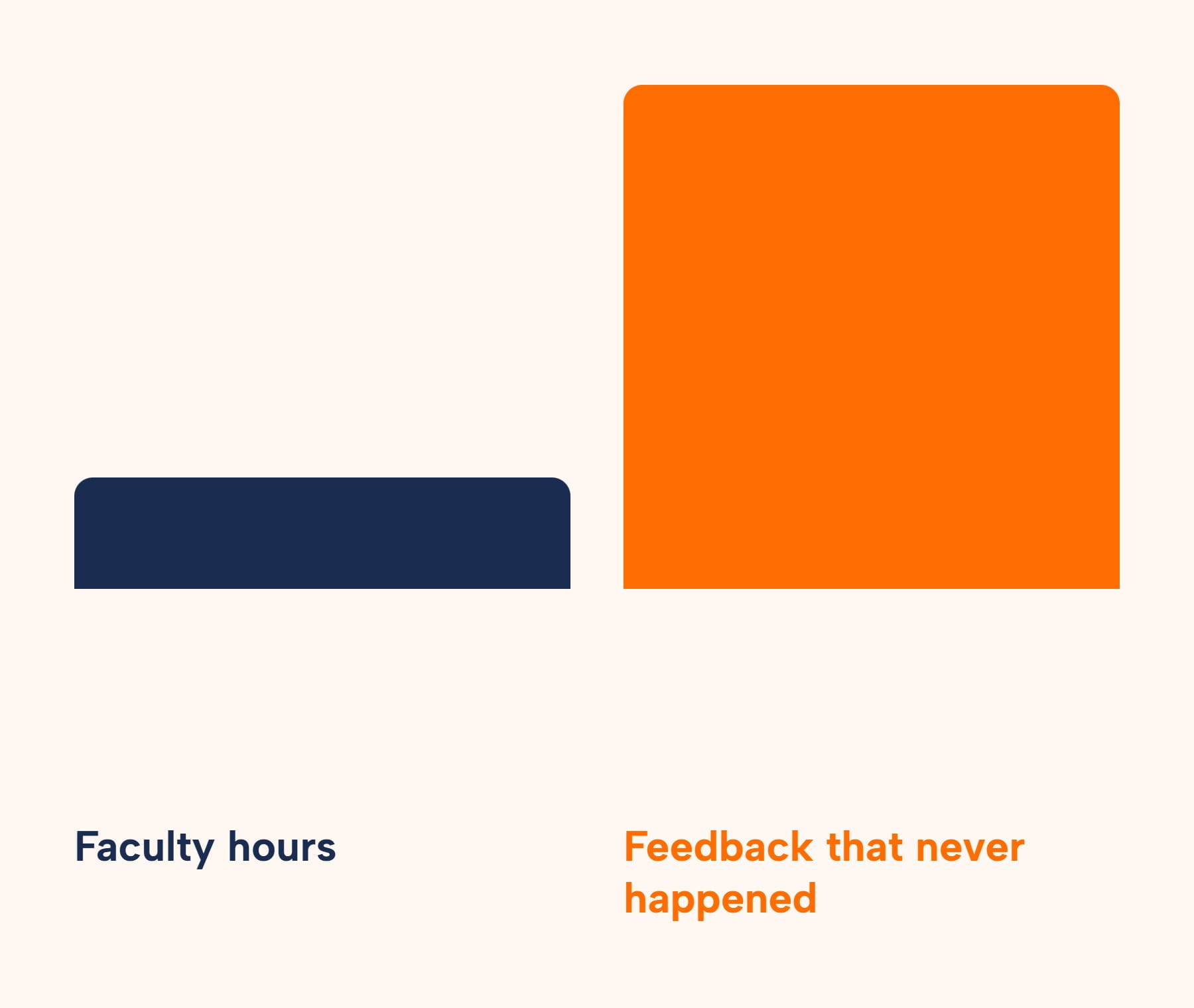
It is easy to underestimate what manual review actually costs, because most of the cost is invisible. There is the obvious expense — faculty hours spent clearing a queue — but the larger cost is the feedback that never happens: the scans no one had time to review, the corrections that arrived too late to change behavior, the learners who plateaued because the loop between practice and guidance was measured in days. None of that shows up on a budget line, but all of it shows up in scanning quality.
Instant Review is best understood as removing that hidden cost rather than adding a new capability. It does not ask faculty to do more; it removes the work that should never have been theirs to carry and hands their scarce expertise back to them. It does not ask a program to accept a worse standard for the sake of scale; it makes a consistent standard the cheap default and reserves human judgment for the decisions that deserve it.
That is why the honest comparison is not against a rival product but against doing nothing differently. Against the status quo, the case is simple: complete coverage instead of sampled, minutes instead of days, one consistent standard instead of many private ones — for less faculty burden, not more.
Instant Review in one paragraph
It is worth dwelling on why speed is not a vanity metric here. Learning is a loop — attempt, feedback, adjustment, next attempt — and the value of each rep depends on how tightly that loop closes. Feedback that arrives days later lands after the learner has already moved on, disconnected from the muscle memory of the scan, and so it teaches far less than the same words delivered while the probe is still warm.
Compressing the loop from days to minutes is not a convenience; it changes how much a clinician learns from every single scan.
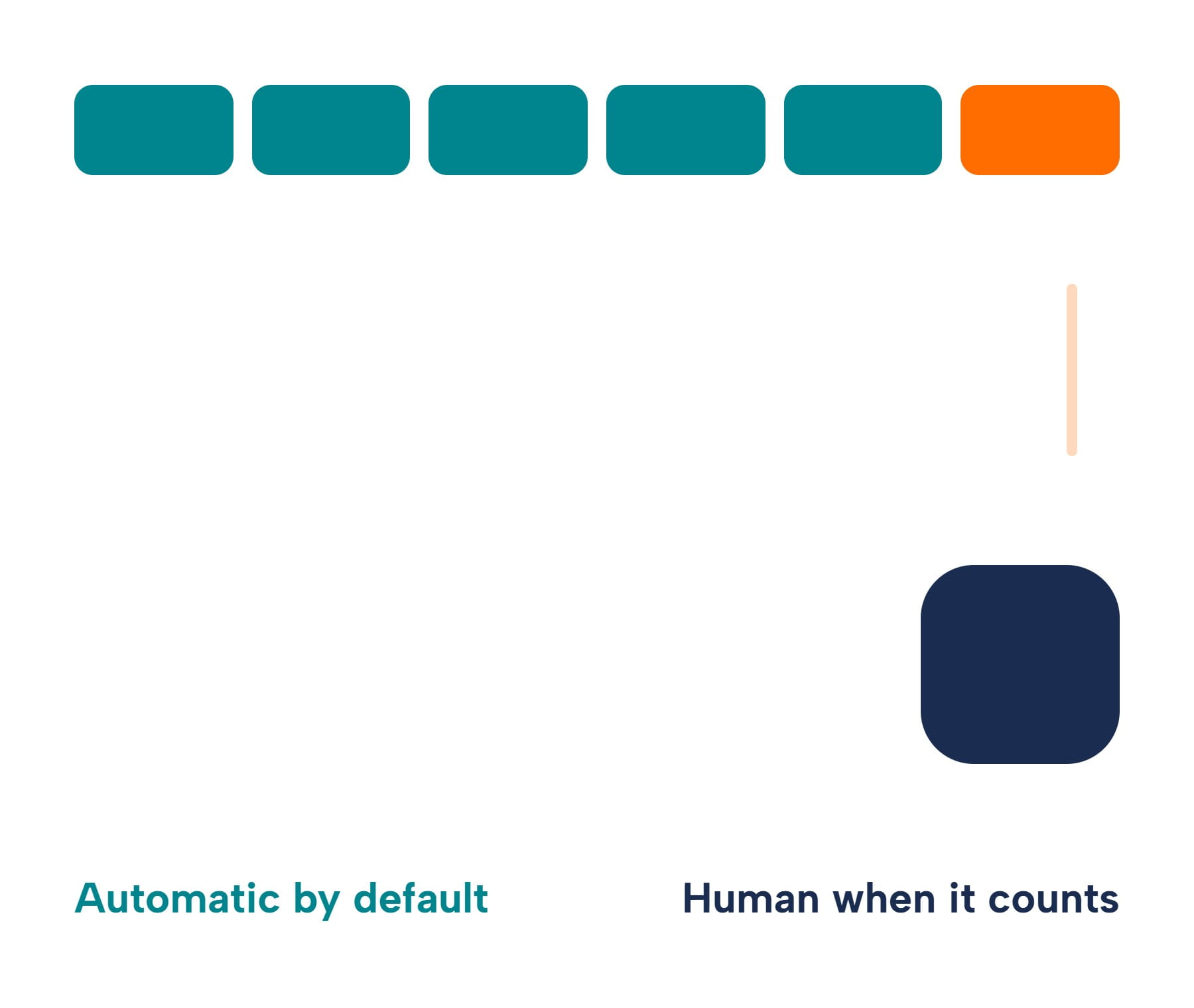
That is the mechanism behind everything else on this page. The pipeline is automated and always on not to impress, but because a review that requires scheduling a human cannot close the loop fast enough to change behavior. Minutes is the threshold at which feedback becomes teaching.
Didn’t find your answer?
No worries! If you have any other questions or need more information, feel free to reach out directly.
Have more questions? Send us a message.
Frequently Asked Questions
How is Instant Review™ different from diagnostic ultrasound AI?
Instant Review™ is built for education and quality assurance, not diagnosis or clinical decision-making. Rather than identifying disease or recommending treatment, it evaluates how well a supported ultrasound scan was acquired and provides coaching on areas such as image quality, completeness, probe technique, and anatomical visualization.
Why use Instant Review™ instead of a generic AI model to review a scan?
Instant Review™ is purpose-built for POCUS education and applies structured, society-aligned criteria rather than relying on an open-ended AI critique. That gives learners and programs a consistent framework for feedback and makes repeated scan evaluations more meaningful for coaching, quality assurance, and tracking improvement over time.
Can Instant Review™ replace faculty or clinical judgment?
No. Instant Review™ handles routine coaching and provides a consistent first layer of feedback, but it does not replace educators, qualified clinicians, or clinical judgment. Faculty remain responsible for teaching and assessment, and clinicians remain responsible for interpretation, diagnosis, and patient-care decisions.