
Quality assurance for your entire POCUS program
Global Ultrasound Institute proudly works with top universities, institutions and medical facilities across the United States and around the world
If you run a program
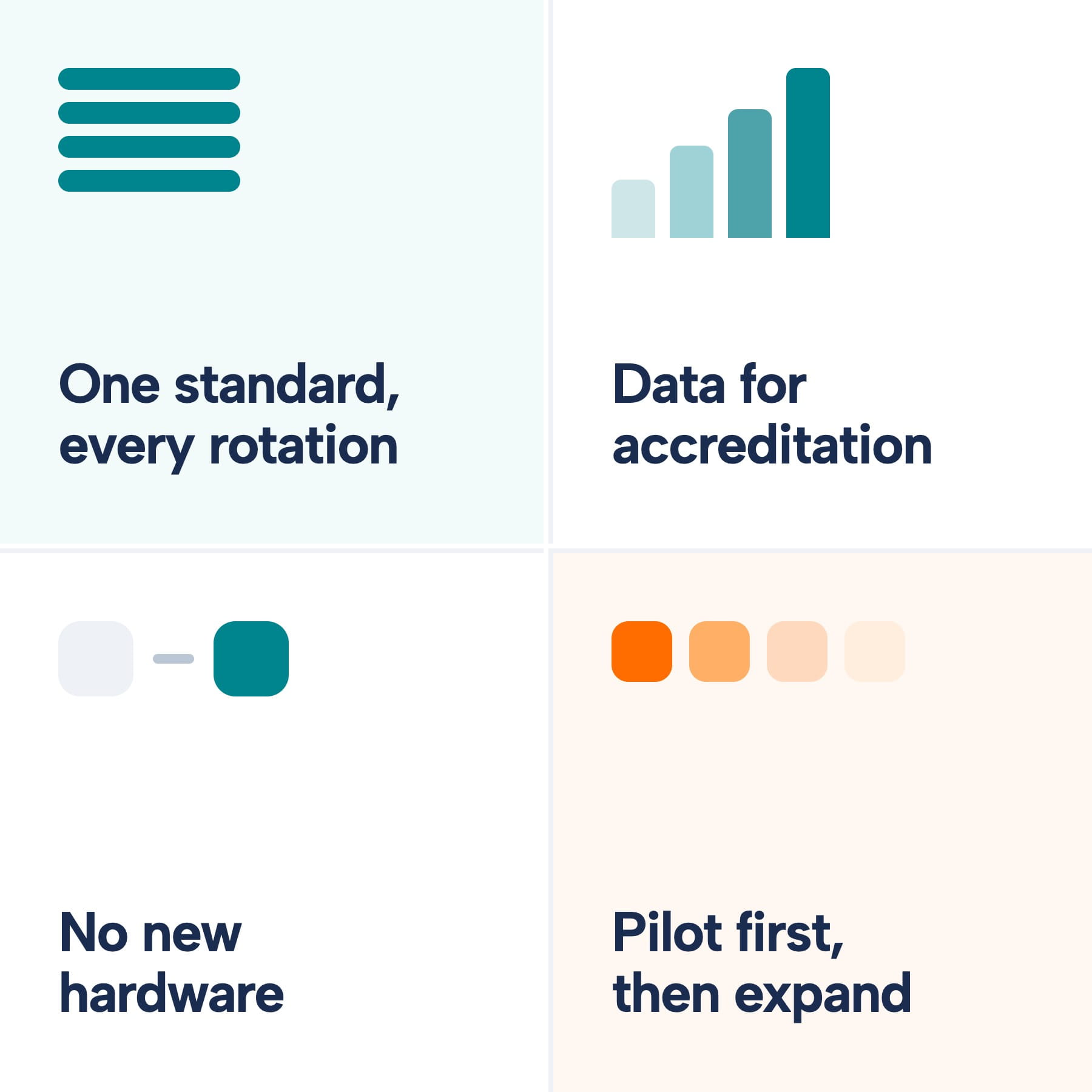
One consistent standard for every learner, every rotation
Longitudinal data for accreditation and milestone reporting
Runs through ScanHub — no new hardware, no migration
Start with a pilot cohort, then expand
Program-wide quality assurance and standardization
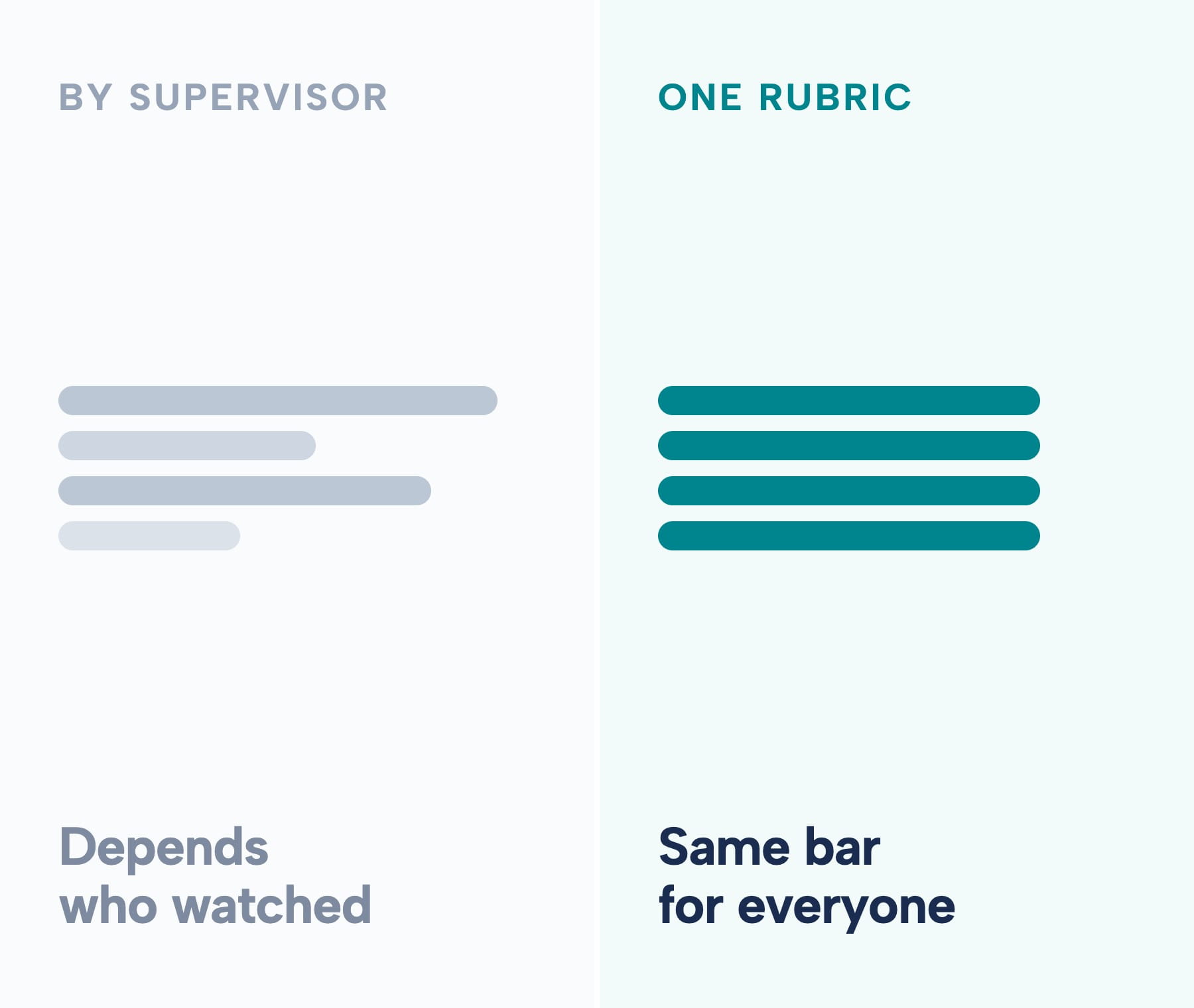
Across a program, the biggest threat to POCUS education is inconsistency. Different faculty apply different expectations, some rotations review scans diligently while others cannot, and the learner’s experience depends heavily on who happened to supervise them. That variability makes it nearly impossible to guarantee that a graduate has met a defined standard — or to defend that claim to an accrediting body.
Instant Review installs a consistent baseline. Every learner’s every scan is evaluated against the same explicit, society-aligned standards, immediately, regardless of site or supervisor. Faculty still provide expert oversight, but they do so on top of a uniform foundation rather than in place of one. The result is a program where “competent in POCUS” means the same thing for every learner who carries your program’s name.
Integration with ScanHub and your workflow
Instant Review does not ask a program to rebuild its infrastructure. It runs through GUSI ScanHub™, which serves as the secure hub for uploading, archiving, and reviewing scans from any device your learners use. Because scans are already centralized there, adding Instant Review is a matter of turning on automated feedback rather than migrating systems. Learners upload the way they already do; the feedback simply arrives faster and more consistently.
For programs that also care about credentialing and privileging, centralized, reviewed scans create a defensible paper trail — the kind of documentation health systems increasingly expect when granting POCUS privileges. That operational tie-in is part of why the administrator conversation and the program conversation increasingly overlap.
Longitudinal outcomes for accreditation and reporting
The hardest question an accreditor or department chair can ask is “show me that your learners are actually getting better.” Most programs cannot answer with data. Instant Review changes that. Because every scan is evaluated against consistent categories, a program accrues a longitudinal record of individual learning curves and cohort trends — evidence of growth over time rather than a single end-of-rotation impression.
That data supports accreditation narratives, milestone reporting, and internal quality improvement. It also makes it possible to spot a struggling learner early, compare cohorts fairly, and demonstrate the return on a program’s POCUS investment. The progress and longitudinal data page goes deeper on what that reporting looks like.
Rollout & pilot path
Security and an education-first posture
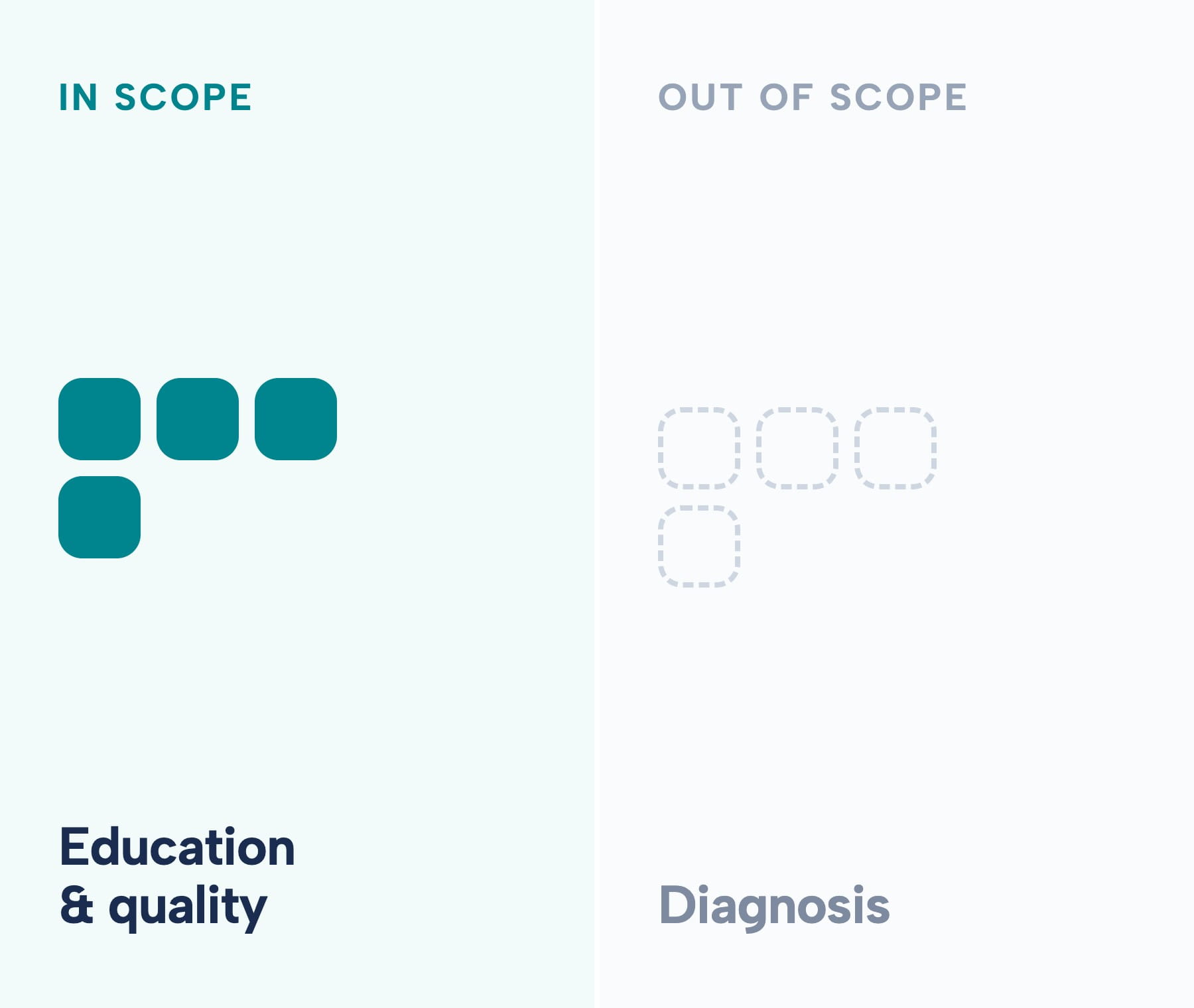
Institutional buyers rightly ask hard questions about data and scope before adopting any AI tool. Instant Review is designed to answer them cleanly. Scans are handled securely within ScanHub, and — most importantly — the tool is education and quality-assurance only. It never makes diagnostic or clinical decisions, which keeps it firmly outside the regulatory and liability territory that a diagnostic device would occupy. For risk-conscious stakeholders, the education-first and safety page lays out the boundaries and safeguards in plain language.
Aligned to the STFM-first rollout, Instant Review is built to meet family-medicine and primary-care programs where they are, then extend across the specialties a health system supports. Whether your priority is standardization, accreditation evidence, or simply relieving overstretched faculty, the program starts from the same place: a consult to map Instant Review to your structure.
The competency question programs cannot dodge
Sooner or later every program is asked the same uncomfortable question: can you prove your graduates are competent in POCUS? For most, the honest answer today is a shrug backed by anecdotes. Scans were reviewed unevenly, standards varied by supervisor, and no durable record exists that would satisfy an accreditor or a skeptical chair. The competency claim rests on faith rather than evidence.
Instant Review is built to replace faith with a record. Because every learner’s every scan is evaluated against the same explicit, society-aligned rubric, a program accumulates exactly the kind of documentation the competency question demands: consistent assessments, mapped to milestones, tracked over time, for every learner rather than a sampled few. When the question comes, the answer is a dashboard, not a shrug.
This matters beyond accreditation. A program that can see competency developing in real time can intervene early with a struggling learner, allocate scanning practice where it will do the most good, and compare this year’s cohort fairly against last year’s. It can also connect that educational record to the operational systems — credentialing, privileging — that increasingly require documented, reviewed scans. Standardization is not bureaucracy for its own sake; it is what lets a program make, and defend, the claims its graduates depend on.
Aligned to a family-medicine and STFM-first rollout, Instant Review is designed to start where primary-care programs are and extend across the specialties a health system supports, so the standard grows with the program rather than forcing it into someone else’s mold.
Getting started without disruption
The practical fear behind any new program tool is disruption — a migration, a training burden, a change to how learners already work. Instant Review is designed to avoid all three. Learners continue to upload scans through ScanHub exactly as they do today; enabling Instant Review turns on automated feedback rather than changing the workflow around it. There is no new device to buy and no system to replace, which is why a pilot can stand up quickly and be judged on results rather than on how much it cost to install.
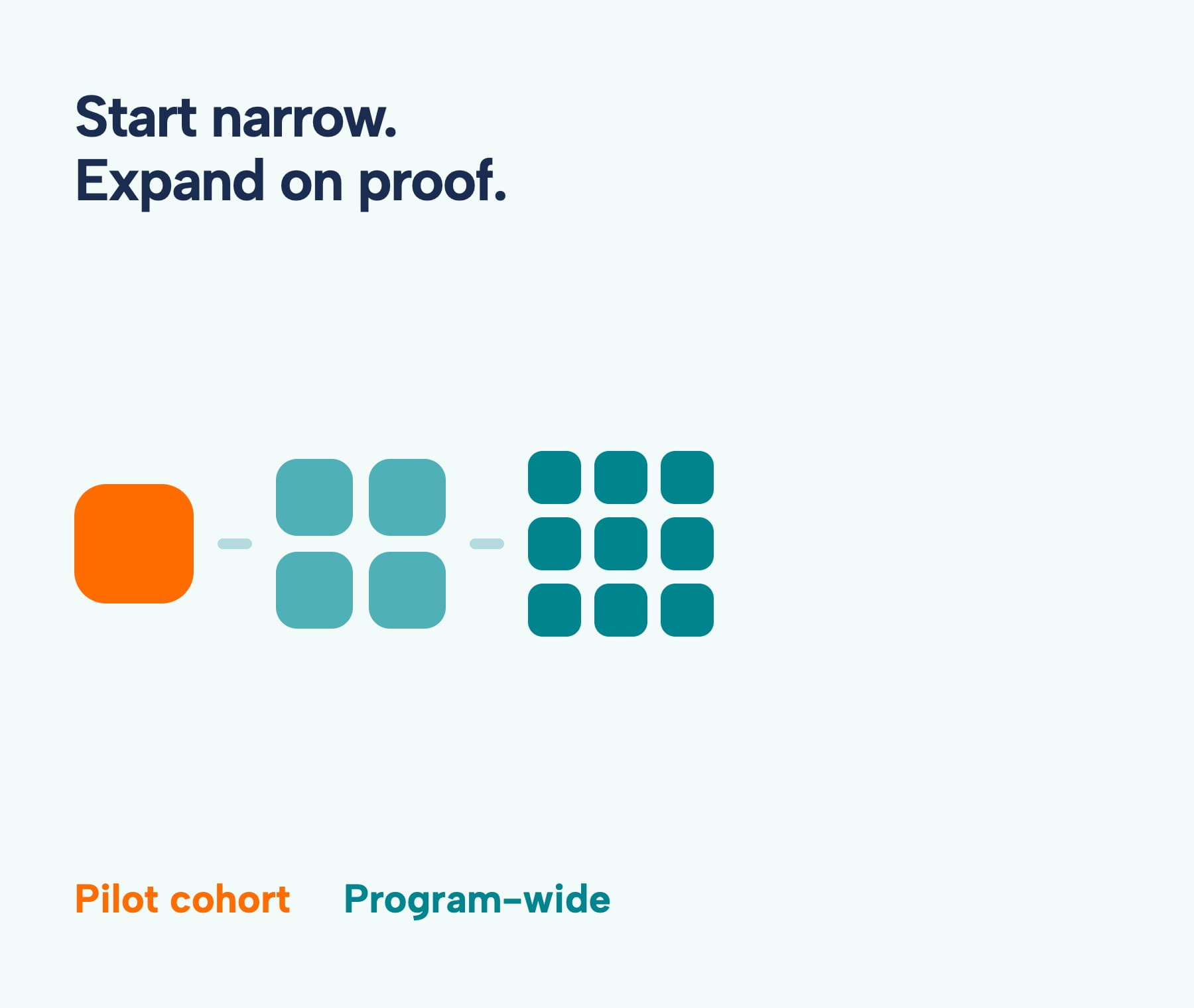
A sensible rollout starts narrow and expands on evidence. Pick a defined cohort — often a fellowship group or a single rotation — turn on automated feedback, and watch what happens to reviewer burden, feedback speed, and learner improvement over a few weeks. If the pilot delivers, expand to more cohorts and specialties; if it raises questions, adjust the configuration before scaling. GUSI’s own fellowship programs are the template for exactly this kind of low-risk, staged adoption, and we will design the pilot with you rather than handing over a generic playbook.
Didn’t find your answer?
No worries! If you have any other questions or need more information, feel free to reach out directly.
Have more questions? Send us a message.
Frequently Asked Questions
How does Instant Review™ help standardize POCUS training across a program?
Instant Review™ evaluates supported scans against the same defined, society-aligned standards across learners, rotations, and training sites. That gives programs a consistent baseline for coaching and quality assurance even when different faculty members or clinical sites are involved. Faculty still provide expert oversight, but learners are no longer dependent on each reviewer applying the standard differently.
Can Instant Review™ data support accreditation and milestone reporting?
Instant Review™ creates a longitudinal record of scan performance over time, allowing programs to see individual learning curves, cohort trends, and areas where additional support may be needed. That record can strengthen accreditation narratives, milestone reporting, and internal quality-improvement efforts by providing evidence of learner development rather than relying only on isolated evaluations or end-of-rotation impressions.
How difficult is it to introduce Instant Review™ into an existing POCUS program?
Instant Review™ runs through GUSI ScanHub™ and works with scans from the ultrasound devices a program already uses, so implementation does not require new imaging hardware. Programs can begin with a defined cohort or rotation, evaluate the workflow and outcomes, and then expand gradually. This staged approach allows teams to validate the fit before rolling Instant Review™ out more broadly.