

See skill grow over time
What you can see
Individual learning curves for each clinician
Cohort and program dashboards
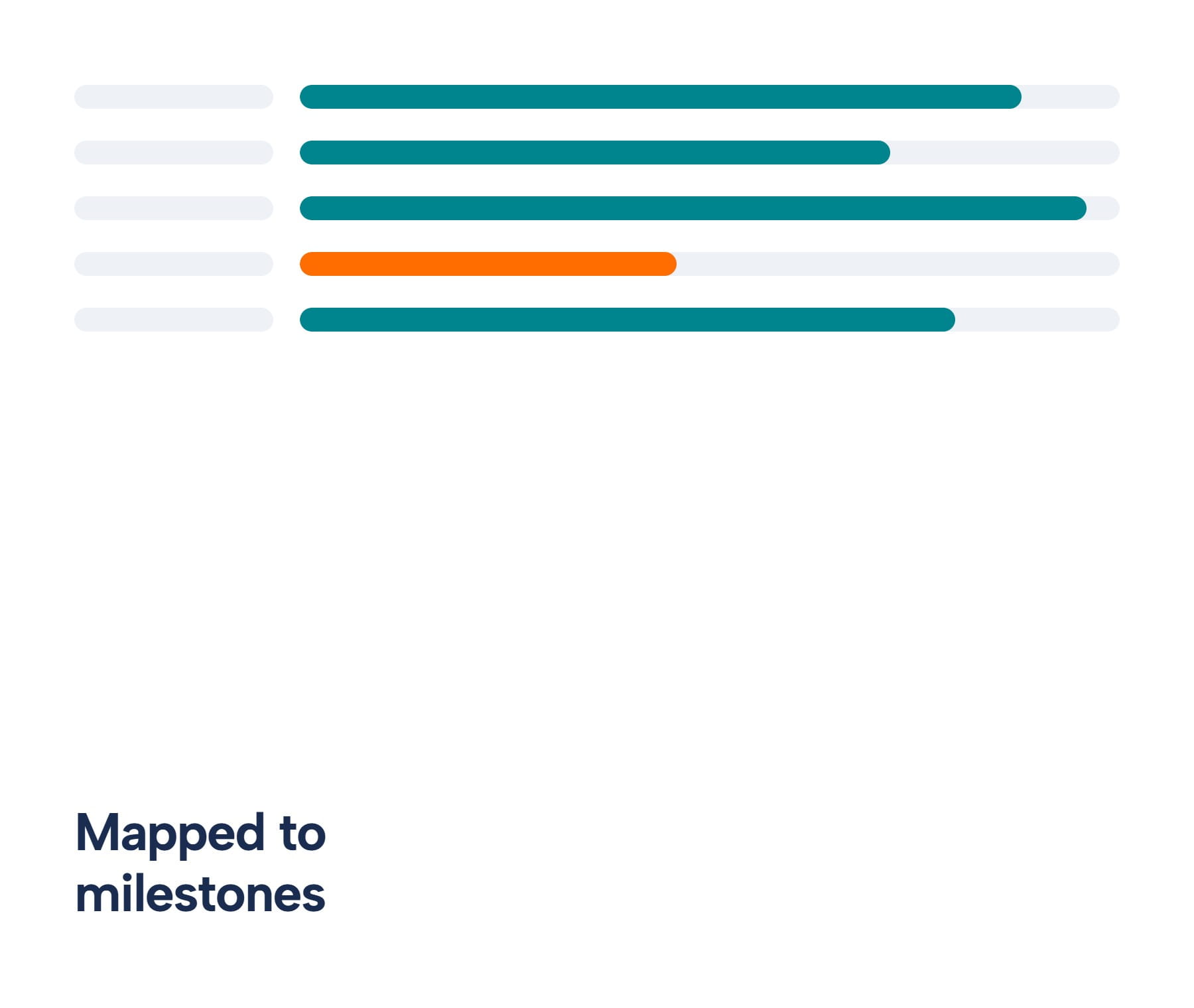
Evidence of improvement over time on a consistent standard
Data that supports accreditation and early intervention
The differentiator competitors lack
Most tools grade a scan and move on. The lasting value is in what happens across many scans over many months. Instant Review is built to own that longitudinal view — improvement over time, not a one-off score — because that is what actually answers the questions learners, educators, and administrators care about: Am I getting better? Is this cohort on track? Is our investment paying off?
Consistency is the enabler. Only because every scan is measured against the same rubric can the scores be compared meaningfully across time and people. Inconsistent feedback cannot produce a trustworthy learning curve; a fixed standard can.
Individual learning curves
Each clinician sees their own trajectory across scans and scan types — where they started, how they have improved, and which categories still need work. It is motivating to watch a curve bend upward, and it is precise enough to direct the next block of practice rather than leaving improvement to chance.
Cohort & program dashboards
Program leaders see the whole picture: how a cohort is progressing, who is on track and who needs support, and how this year compares to last. Early warning replaces end-of-rotation surprise, and fair comparison replaces gut feel.
Didactic and scan data, together
Skill is not only what happens on the probe. Instant Review’s longitudinal view is designed to sit alongside the didactic progress a learner makes in GUSI’s courses and fellowships, so a program can see both halves of competence — the knowledge and the hands — as one connected story. That combined picture is far more useful for milestone decisions than either signal alone.
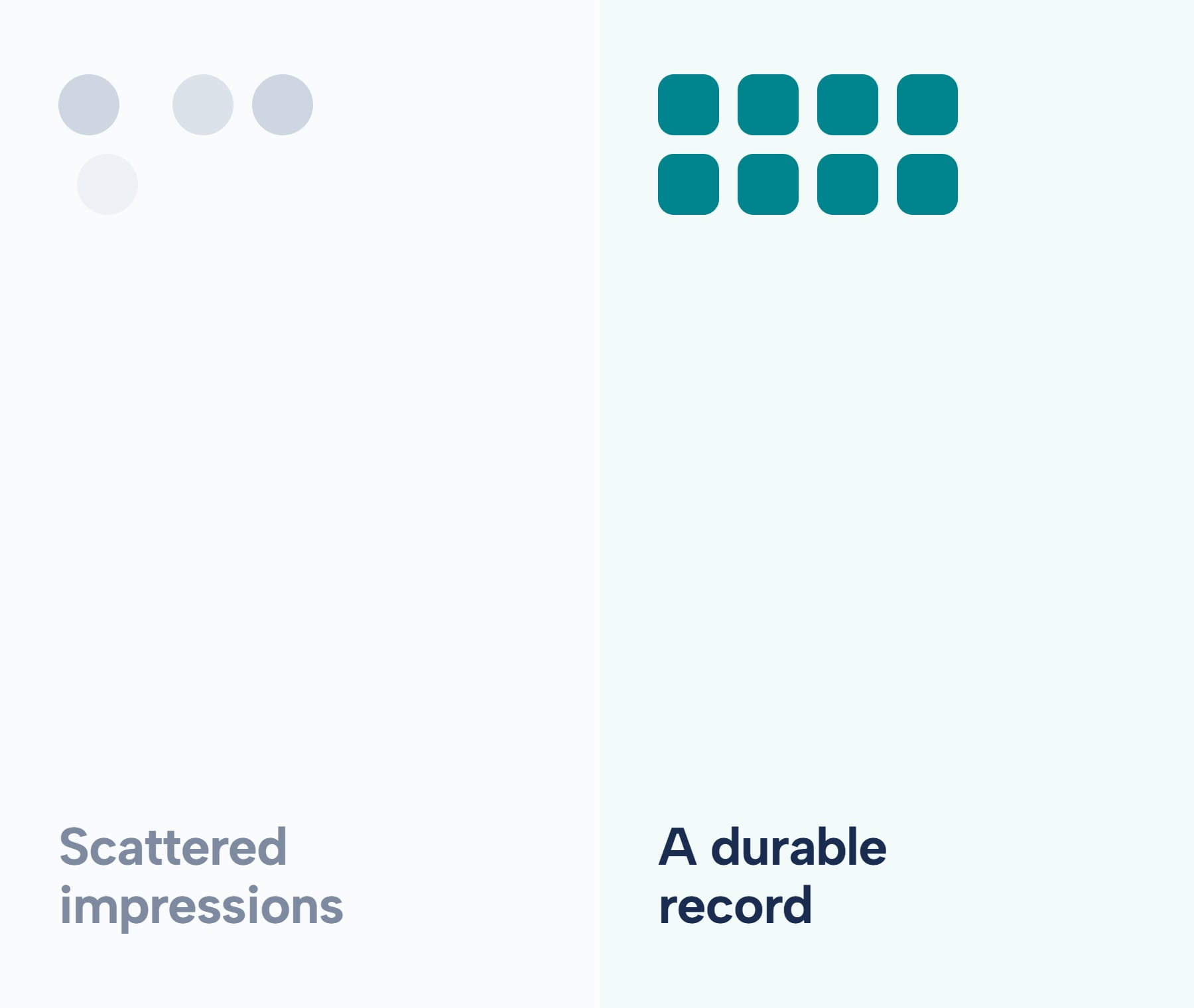
Over time, this becomes a program’s institutional memory of POCUS competence: a durable, comparable record that outlives any single faculty member’s impressions and travels with the program’s accreditation and quality reporting.
What the data supports
Accreditation and milestone evidence
Early identification of struggling learners
Fair cohort-to-cohort comparison
Return-on-investment for POCUS programs
Outcomes you can tell a story with
Data earns its keep when it becomes a narrative leadership can act on. Instant Review’s longitudinal outputs are meant to translate directly into the stories programs and administrators need to tell: that learners measurably improved, that quality is monitored system-wide, and that POCUS is delivering value worth continued investment. For administrators building the case at the executive level, this is the evidence layer beneath the argument; for programs, it is the accreditation-ready proof of growth. Both start with the same consistent, scan-by-scan foundation.
From data to decisions
For an administrator, POCUS sits at the intersection of three concerns that are usually managed separately: clinical quality, financial value, and institutional risk. Handled well, point-of-care ultrasound improves care, captures reimbursable value, and strengthens the system’s standing. Handled loosely, it becomes an unmonitored liability — clinicians scanning without oversight, value left on the table, and exposure with no documentation to answer for it. The difference between those
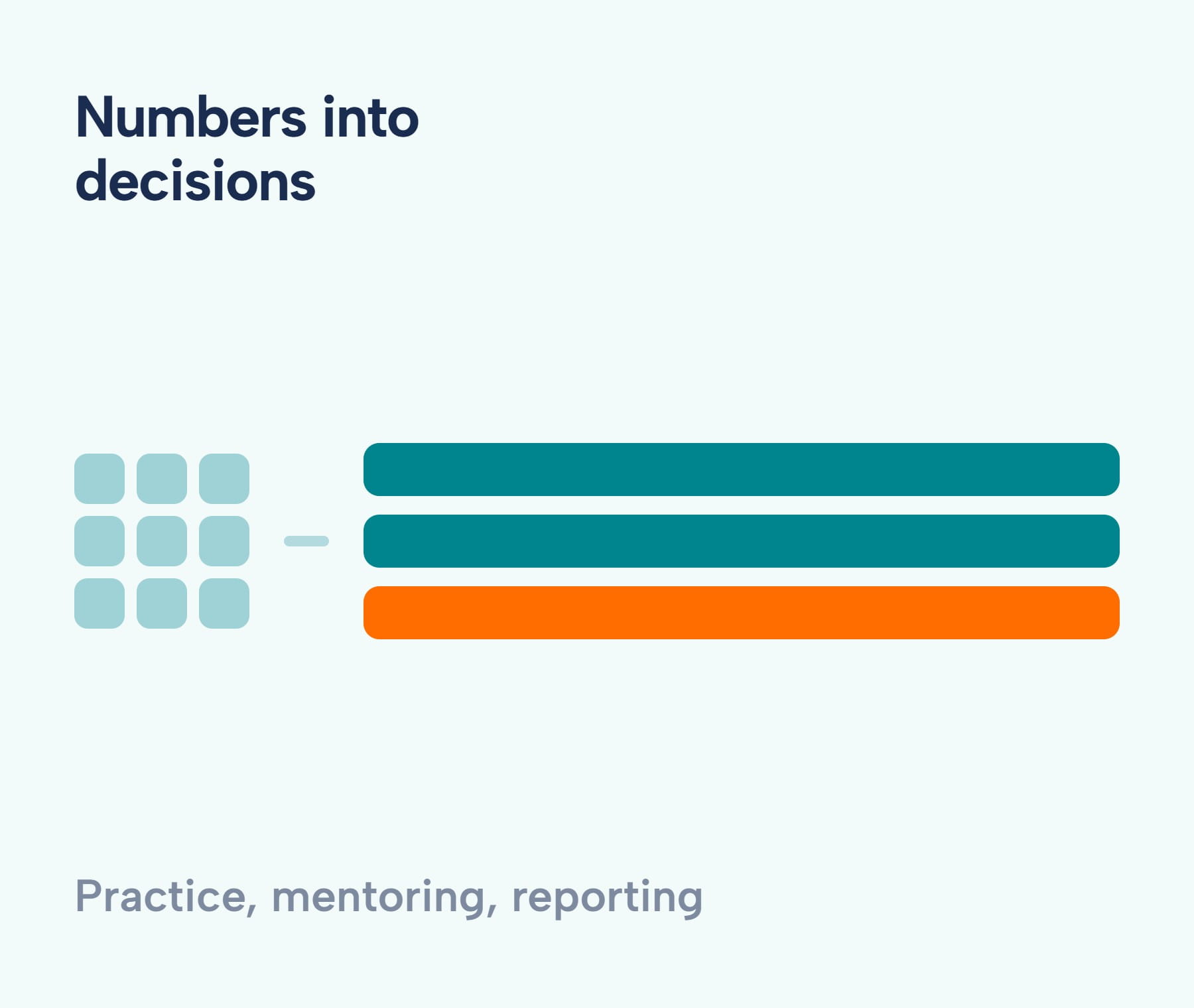
Data is only valuable if someone acts on it, so Instant Review’s longitudinal view is built around the decisions people actually make. A learner deciding what to practice next needs to see which categories keep costing them points; the individual learning curve answers that directly. A faculty member deciding where to spend a mentoring hour needs to know who is falling behind before the end of a rotation; the cohort view surfaces it early. A program director preparing an accreditation narrative needs evidence of growth over time; the same consistent record supplies it. Each view is designed backward from a decision, not forward from a database.
The power comes from consistency plus time. Any single score is noisy — a good scan on a lucky day, a poor one on a hard one. Across dozens of scans measured against the same rubric, the noise averages out and the signal emerges: a genuine trajectory that shows whether skill is improving, stalling, or slipping. That is a fundamentally different and more trustworthy thing than a stack of one-off grades from a rotating cast of reviewers, and it is only possible because every scan was measured the same way.
Over quarters and years, this record becomes a program’s institutional memory of POCUS competence — comparable across cohorts, durable beyond any individual faculty member, and portable into the reporting an accreditor or a health system expects. It lets a program answer the questions it is most often asked and least often able to prove: are our learners getting better, is this cohort on track, and is our investment in POCUS paying off? Those are the questions that decide budgets and accreditation, and they deserve an answer built on evidence rather than impression. Instant Review’s longitudinal data is designed to be exactly that evidence, and to translate cleanly into the stories leadership needs to tell.
two outcomes is a quality layer, and that is precisely the gap Instant Review fills.
The value-capture argument is often the one that moves fastest at the executive level. Privileging clinicians for POCUS typically requires documented, reviewed scans against competency criteria; billing for ultrasound requires defensible image and interpretation records; credentialing requires evidence that a standard was met. Each of those workflows depends on exactly what most systems lack today — a consistent, well-documented review process. Centralized, reviewed scans in ScanHub, evaluated against society-aligned standards, become the connective tissue that turns scattered scanning into a billable, credentialed, privilege-ready capability.
The risk argument is the mirror image. Because Instant Review is education and quality-assurance only — never diagnostic — it strengthens governance without dragging the institution into the regulatory and liability territory a diagnostic device would occupy. It gives leadership a defensible story: POCUS is standardized, monitored, and documented across the system. For the one-on-one conversations and executive meetings where these decisions are actually made, that story, backed by longitudinal data, is the entire point — and it is what the materials here are designed to support.
The metrics that matter
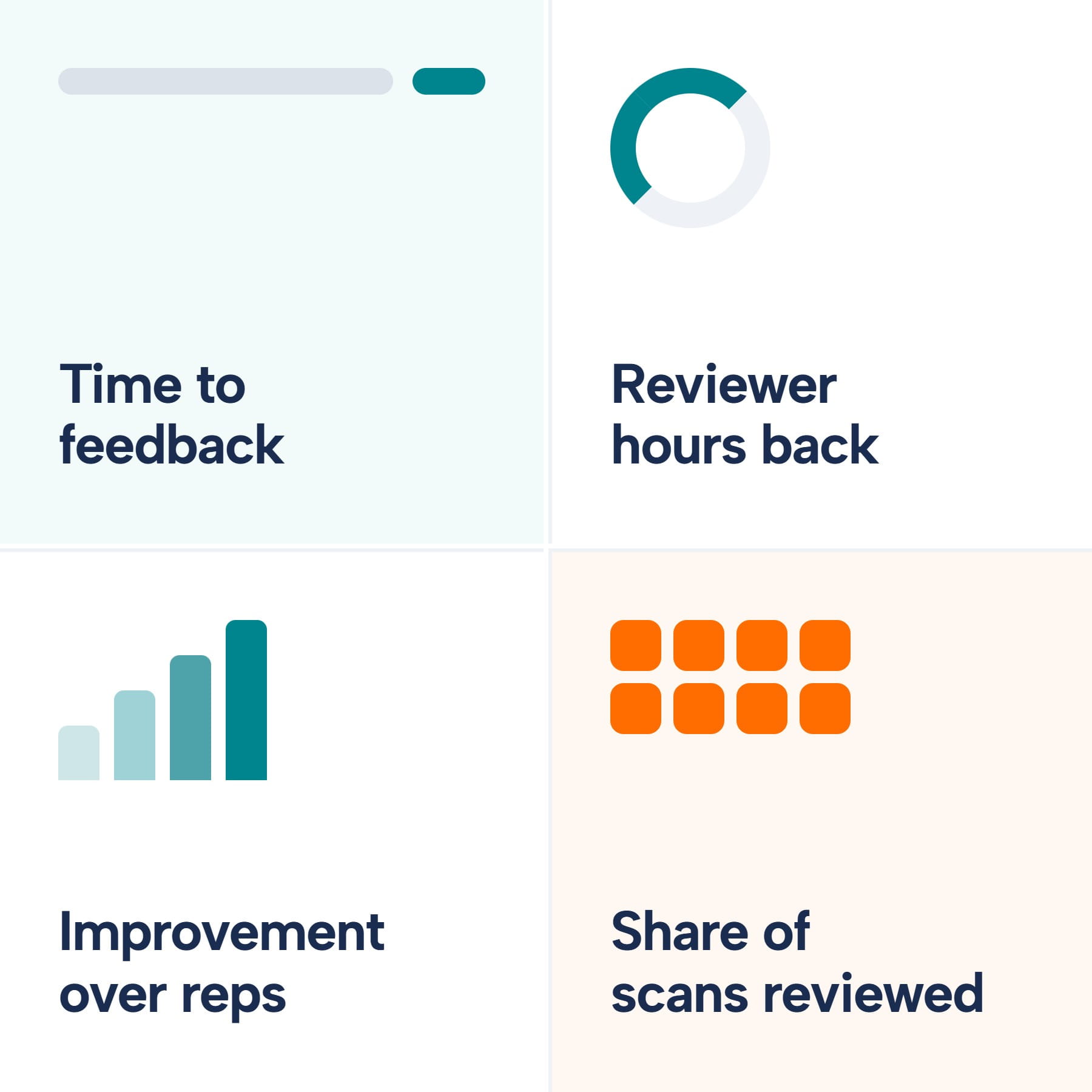
When programs and administrators ask what the longitudinal view will actually show them, the answer is a small set of metrics chosen because each one answers a real question. Time-to-feedback demonstrates the behavior-changing shift from days to minutes. Reviewer hours returned quantifies the faculty burden lifted from the manual queue. Improvement across repeated scans, measured on a consistent rubric, is the direct evidence of skill growth that accreditation narratives demand. And the share of scans reviewed — climbing from a sampled fraction toward one hundred percent — shows the move from quality sampling to genuine quality assurance.
Around those headline numbers sit the diagnostic views that make them actionable: individual learning curves for coaching decisions, cohort dashboards for early warning and fair comparison, and category-level breakdowns that reveal where a whole group struggles. Together they let a program answer, with evidence rather than impression, the three questions that decide budgets and accreditation — are our learners getting better, is this cohort on track, and is our POCUS investment paying off. The metrics are deliberately few and deliberately tied to decisions, because a dashboard that measures everything and changes nothing is just decoration. Instant Review’s job is to produce the handful of numbers a program will actually act on, and to keep producing them consistently enough that the trends can be trusted.
Didn’t find your answer?
No worries! If you have any other questions or need more information, feel free to reach out directly.
Have more questions? Send us a message.
Frequently Asked Questions
What does Instant Review™ track over time?
Instant Review™ builds a longitudinal record from repeated scan evaluations, allowing learners and programs to see how performance changes across areas such as image quality, completeness, probe technique, and anatomical visualization. Over time, this creates individual learning curves and broader cohort-level views that show where skills are improving and where additional support may be needed.
How can I trust that progress shown in Instant Review™ reflects real improvement?
Instant Review™ evaluates supported scans using the same structured criteria over time. Applying a consistent rubric makes repeated evaluations more comparable and helps reduce the variability that can occur when different reviewers use different standards. While any single scan is only one data point, patterns across many scans provide a more meaningful view of a learner’s trajectory.
Can we spot struggling learners early?
Yes — cohort views surface who needs support before the end of a rotation.

Get early access
Book a consult
For educators, faculty, programs, and administrators evaluating Instant Review for a group.
For educators, faculty, programs, and administrators evaluating Instant Review for a group.
"*" indicates required fields
Join the waitlist
For individual learners and fellows who want early access when it opens.
For individual learners and fellows who want early access when it opens.
"*" indicates required fields